Est. 1974
A counter, kept honest
Freshly landed. Honestly sold.
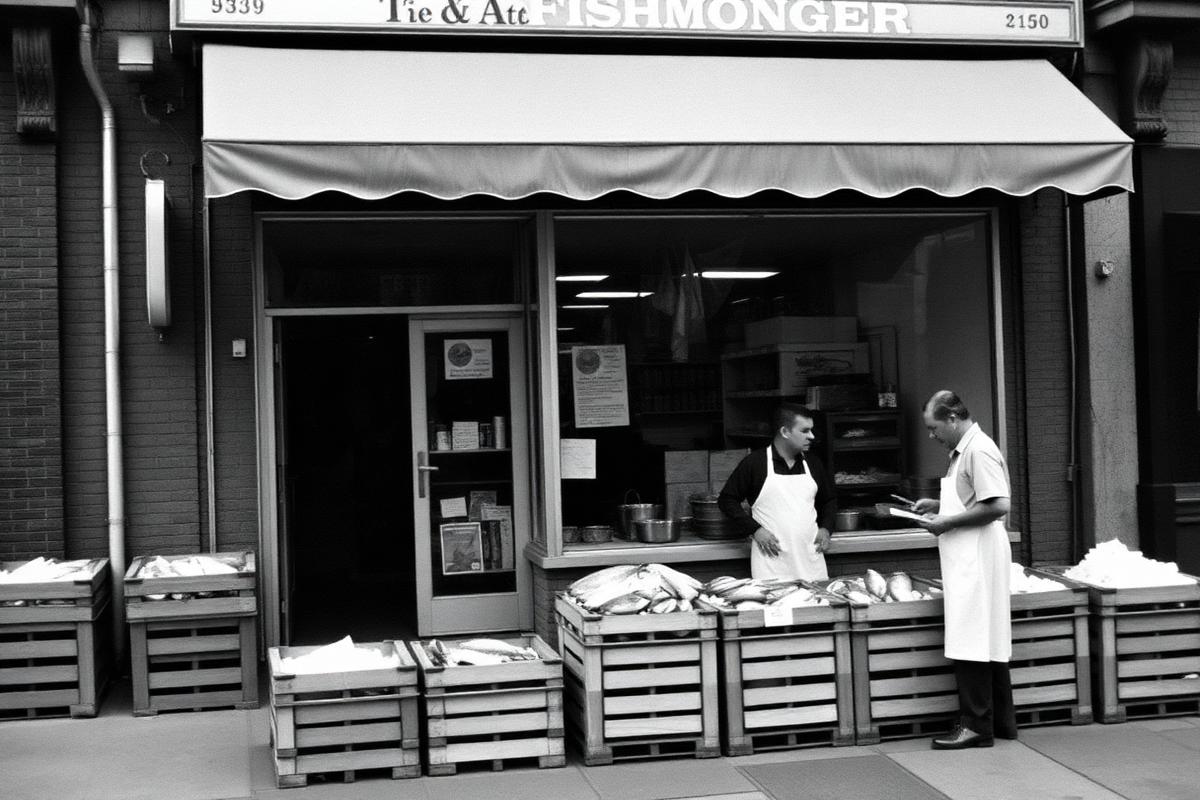
The first North Sea counter was a single marble slab, a walnut cabinet bought second hand, and a hand-lettered board that was rewritten every morning because the boats never agreed with yesterday.
The family had come from a coast where fish was weighed in front of you and the price was the price. When they opened here, they carried the same rule across the water: never sell a fish you wouldn't take home, and never let a customer leave without knowing what they bought and how to cook it.
Crowfoot came later. The neighbourhood was young, the shop unit was plain, and the only thing brought over from the old store was the cabinet — refinished, still walnut, still holding ice. Regulars followed. Then their children. Then, in the ordinary way that makes a shop into an institution, their children's children came in asking for “the same thing my grandmother used to get for Christmas Eve.”
The work has barely changed. We buy small and often rather than large and rarely. We take delivery before the street wakes up. We cut to order, because a fillet cut the day before is a different fish. And we still write the board by hand, because the boats still never agree with yesterday.
Everything else — the website you're reading, the boxes we pack, the standing orders we run — is only a longer arm reaching out from the same counter.
From the shop
Maxine kept a bottle of Baileys in the back fridge for more than ten years. It was a gift from a regular who knew she never drank during service. She opened it twice — once the night her granddaughter was born, and once the day the Crowfoot sign first lit up. Both times she poured a small glass, raised it toward the ice case, and went back to work. The bottle is still there, mostly full, because some things are better kept as promise than poured out.